How Arsenal Defense Stacks Up Against the Legendary Backlines of English Football
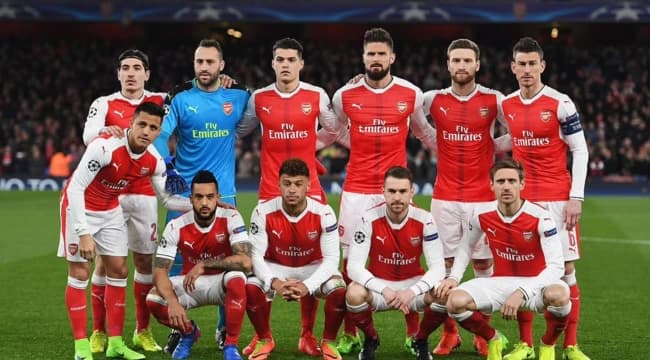
In the history of English football, a handful of teams have set defensive standards that shaped how the game is understood. From the organized rigidity of George Graham’s Arsenal in the early 1990s to the unbeatable Chelsea of José Mourinho’s first reign, elite defensive units have often defined eras. In recent seasons, Arsenal have been re-establishing themselves as one of the most structurally disciplined sides in the Premier League. The question now stands: how does Arsenal’s current defensive setup compare to the greatest backlines in English football history?
This discussion goes beyond raw statistics. Defensive excellence blends tactical understanding, individual talent, communication, and the ability to impose a defensive identity across different types of opponents. As fans search for live updates and match coverage, platforms like Totalsportek have become key destinations to follow Arsenal’s rise and track whether this defensive resurgence belongs among the iconic greats of the past.
The Foundation of Arsenal’s Modern Defensive Identity
Under Mikel Arteta, Arsenal’s defensive progression has been methodical. The strategy focuses on compact shape, structured pressing, and controlled tempo. Rather than relying solely on physical defenders or deep blocks, Arsenal aim to limit transitions and control territory. A key part of this is the defensive contribution from the entire team, starting from the forward line.
The center-back pairing forms the spine of Arsenal’s new identity. The blend of aerial dominance, positional awareness, and ball-playing comfort allows Arsenal to defend higher up the pitch than previous eras. Full-backs tuck inside when needed, midfield screens passing lanes, and the goalkeeper plays as an auxiliary distributor to prevent pressure.
While statistics can fluctuate across seasons, Arsenal have regularly positioned themselves near the top of the league in goals conceded, expected goals against, and possession regained in advanced areas. These indicators suggest not just strong defending, but a system built to limit opponents’ ability to create meaningful chances.
Comparisons to Historic Arsenal Defenses
Arsenal are no strangers to great defensive structures. The club has featured several legendary backlines, and any comparison must consider the standard set by the past.
George Graham’s “1-0 to the Arsenal” Era (Late 1980s to Mid-1990s)
This period established Arsenal’s reputation as a defensive fortress. Led by Tony Adams, Steve Bould, Lee Dixon, and Nigel Winterburn, the backline was physical, disciplined, and tactically drilled. The group moved as one, relying on strong organization rather than athletic recovery.
Arteta’s Arsenal differ in style. The modern backline defends space rather than players, pressing high and holding shape rather than sitting deep. However, the shared values of discipline and communication are unmistakable. The club has returned to a mentality where defensive reliability is expected, not hoped for.
The 2003–04 Invincibles
The Invincibles excelled at controlling games through midfield dominance, but their defensive record was strong because of balance and stability. Sol Campbell and Kolo Touré formed a center-back pairing that blended strength with mobility. Ashley Cole and Lauren provided athletic coverage on the flanks. Jens Lehmann acted as a commanding presence in goal.
The modern team echoes this through versatility: defenders comfortable stepping forward into play, tracking wide, or engaging in physical duels. The Invincibles remain unmatched in league achievement, but stylistically, the current Arsenal defense feels more in line with modern European tactical trends.
Comparisons to Iconic Premier League Defenses
To understand Arsenal’s place historically, comparisons to other legendary English defenses are required.
Manchester United (1998–2001)
United relied on a strong defensive spine with Jaap Stam, Gary Neville, Denis Irwin, and Roy Keane shielding in midfield. Their defensive success came from relentless intensity and command of the penalty area. Arsenal share similarities in work rate and shape control, though United’s approach was more transitional and direct.
Chelsea Under Mourinho (2004–2006)
This Chelsea side holds one of the greatest defensive records in Premier League history. John Terry led a backline supported by Ricardo Carvalho, Claude Makelele in midfield, and Petr Čech in goal. Their strength was defensive compactness and masterful game management. Few teams have made scoring feel so impossible for opponents.
Arsenal’s current structure draws clear tactical parallels. Both teams prioritize restricting central penetration and funneling play into less dangerous wide zones. However, Arsenal add more fluidity and short passing sequences to build sustained pressure.
Manchester City Under Guardiola (2018–Present)
Manchester City’s dominance has stemmed largely from ball control. They defend by maintaining possession and positioning. Arsenal’s current system borrows heavily from this philosophy. Defensive strength is linked to attacking patience and positional discipline. However, Arsenal place more emphasis on physical duels and direct defensive interventions.
The Role of Squad Depth and Rotation
A defining feature of sustained defensive excellence is depth. Injuries, fixture congestion, and tactical adjustments force rotations. Arsenal now possess multiple defenders capable of starting without weakening the system. Versatile wide defenders, adaptable midfield screens, and a confident goalkeeper group create stability across competitions.
Historically, teams with legendary defensive reputations rarely relied on just one lineup; they built defensive cultures. Arsenal appear to be in the process of establishing such a culture once again.
Where Arsenal Stand in the Historical Rankings
It is premature to place Arsenal firmly among the greatest defensive teams in English history. Greatness demands longevity. George Graham’s defense lasted nearly a decade. Chelsea’s mid-2000s defense dominated for multiple seasons. The Invincibles are remembered for immortality, not just excellence.
However, Arsenal have developed a clear identity built on defensive control and tactical structure. If the team maintains this level over multiple seasons and competes consistently for league titles and European honors, the comparison with historic giants will become more concrete.
Following Arsenal’s Progress
As discussions continue about where Arsenal rank historically, fans want to follow every match, tactical shift, and performance milestone. Platforms like Totalsportek provide access to live match coverage, updates, and free soccer streams that allow supporters to watch the evolution in real time. This ongoing visibility keeps the debate active: are we witnessing the rise of a defense that will be remembered alongside the most iconic in English football history?
Conclusion
Arsenal’s current defensive unit reflects modern tactical thinking, organizational clarity, and squad balance. While not yet on the historical level of Chelsea’s 2000s wall or the Invincibles’ unbeaten season, the foundation is firmly in place. If Arsenal continue to refine and maintain this defensive standard over multiple campaigns, the conversation will shift from comparison to confirmation. For now, their rise represents one of the most compelling ongoing developments in English football, one that fans continue to track closely through platforms like Totalsportek.